Kitchen size matters more than most people realise
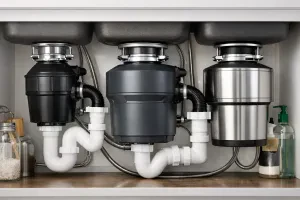
Choosing a garbage disposal isn’t just about horsepower or brand loyalty. One of the biggest factors in long-term satisfaction is how well the disposal matches the size and layout of your kitchen.
What works perfectly in a compact apartment can feel underpowered in a busy family kitchen. Likewise, a high-powered unit designed for heavy use can feel unnecessarily loud or oversized in a smaller space.
This is where many homeowners get stuck.
They compare models based on specs alone, without considering how noise, usage patterns, and kitchen layout affect everyday experience. The result is often a disposal that technically works — but doesn’t feel like the right fit.
This guide is designed to simplify that decision.
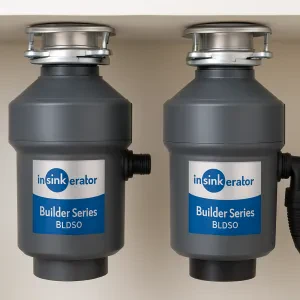
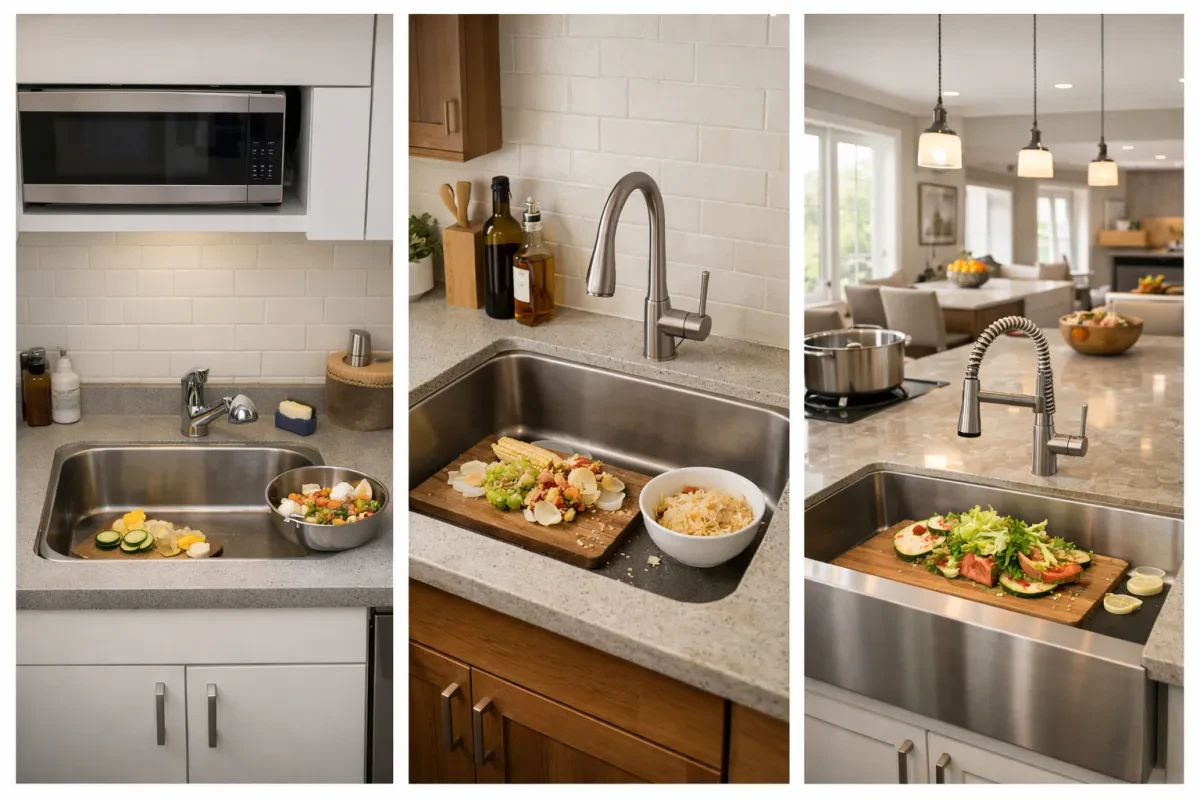
Rather than ranking models from “best to worst,” we’ll look at how different InSinkErator disposals perform in real kitchens — from small apartments to large, high-use households. The goal is to help you narrow down the right category first, before worrying about specific models.
If you already know your kitchen size and how often you cook, the choice becomes much clearer.
Small kitchens and apartments: keeping things simple (and quiet enough)
When the disposal lives close to everyday life
In smaller kitchens, the disposal is often closer to where you live, eat, and relax. That makes noise, size, and vibration far more noticeable than raw grinding power.
This is where many people accidentally overbuy.
They assume a bigger motor will always mean better performance, without considering how often they actually cook or how much food waste they generate day to day. In compact kitchens, that extra power rarely gets used — but the extra noise and bulk definitely do.
Why lighter use changes what “good performance” means
For apartments, condos, and smaller homes, the priority is usually reliable everyday performance without overwhelming the space.
Light to moderate food waste, simple meals, and shorter run times are the norm here. When the disposal is used, it’s often for plate scrapings rather than heavy prep waste.
In these situations, entry-level and mid-range disposals tend to feel the most balanced.
Compact designs tend to age better in small spaces
They’re compact enough to fit comfortably under shallow sinks, powerful enough to handle daily scraps, and straightforward to install or replace. Most importantly, they do their job without drawing attention to themselves.
That predictability matters in shared or tight living environments.
Noise matters — but expectations should stay realistic
Noise still matters, especially when kitchens are part of open living areas or share walls with neighbours.
No disposal is silent, particularly at lower price points. In a small kitchen, the goal isn’t silence — it’s avoiding harsh rattling, excessive vibration, or long grind times that make the whole space feel disrupted.
This is where simpler, proven designs often perform best.
Ease of access matters more than people expect
Kitchen size also affects how tolerant you’ll be of maintenance.
In apartments or tight spaces, access under the sink can be limited. Units that are easy to install, easy to replace, and forgiving with everyday use tend to be a better long-term fit than feature-heavy options.
Fewer surprises usually mean fewer frustrations.
When to stop sizing up — and move on
If you’re cooking occasionally, working with limited counter space, or sharing walls with neighbours, choosing a disposal that’s appropriately sized — rather than oversized — keeps the experience smooth and unobtrusive.
Once kitchens get larger and cooking becomes more frequent, priorities start to shift. That’s where quieter operation and refined grinding systems start to matter more — and where upgrading begins to make sense.
Let’s move up to medium-sized family kitchens, where those differences become much more noticeable.
Medium family kitchens: where quiet performance starts to matter
When the kitchen becomes a shared space
In medium-sized family kitchens, the disposal stops being an occasional convenience and starts becoming part of daily routine.
Meals are cooked more often. Prep waste increases. The sink gets used throughout the day rather than once or twice. And because many family kitchens open directly into living or dining areas, whatever happens at the sink is suddenly very noticeable.
This is usually the point where people begin to care less about whether a disposal can handle food waste at all — and more about how it does it.
Why noise tolerance drops as usage goes up
In family kitchens, disposals tend to run more frequently and for longer bursts.
That repetition changes how noise is perceived. A loud grind that felt acceptable once a day becomes irritating when it happens multiple times during dinner prep or cleanup.
This is where many homeowners realise that raw power alone doesn’t equal a better experience.
A disposal that clears food quickly but sounds harsh or vibrates heavily can make the entire kitchen feel less comfortable, especially in open-plan homes.
The shift from “good enough” to “noticeably better”
This is the range where mid-to-premium disposals start to justify themselves.
Quieter operation, smoother startup, and finer grinding don’t just feel like luxury features — they reduce friction in everyday use.
Multi-stage grinding systems help break food down more thoroughly, which often means shorter run times and fewer repeat cycles. Better insulation and vibration control keep sound contained instead of echoing through cabinets and adjacent rooms.
Over time, those small improvements add up.
Why many families upgrade earlier than planned
A common pattern in family kitchens is upgrading sooner than expected.
Homeowners start with a basic disposal that technically meets their needs. But as cooking frequency increases, irritation builds — noise, vibration, or occasional jamming becomes more noticeable.
At that point, the upgrade isn’t about chasing features. It’s about restoring comfort.
This is where the InSinkErator Evolution Series tends to make sense for many households. It offers similar or greater grinding capability than entry-level units, but with quieter operation and more refined internals designed for frequent use.
Balancing power, noise, and longevity
Medium-sized kitchens sit right in the middle of the decision spectrum.
You don’t need commercial-grade torque, but you do benefit from consistent performance that doesn’t degrade under daily use.
Disposals in this category are often chosen not because they’re the strongest available, but because they feel easier to live with year after year.
When a disposal fades into the background — doing its job without drawing attention — it’s usually the right fit.
Knowing when to step up again
For most families, this tier offers the best balance of comfort, durability, and performance.
However, once kitchens get larger, households grow, or cooking becomes heavier and more frequent, even these models can start to feel stretched.
That’s when priorities shift again — away from refinement and toward sheer capacity and strength.
Next, we’ll look at large and heavy-use kitchens, where power takes the lead and different trade-offs come into play.
Large and heavy-use kitchens: when power becomes the priority
When the kitchen does real work every day
In large kitchens, disposals are rarely an afterthought.
These are spaces built for volume — bigger meals, more prep, larger families, or households where cooking happens daily and often intensively. Food waste is heavier, more varied, and more frequent.
In this environment, disposals aren’t just clearing plates. They’re handling prep scraps, fibrous waste, and repeated use without much downtime.
This is where undersizing becomes obvious very quickly.
Why refinement alone stops being enough
Quieter operation and smoother grinding still matter, but they stop being the main decision drivers.
In heavy-use kitchens, the bigger concern is whether the disposal can keep up without stalling, jamming, or requiring frequent resets.
Longer run times, higher torque demands, and repeated cycles put real stress on motors and grind components. Disposals designed primarily for comfort can start to feel strained in this context.
At this stage, reliability under load becomes more important than refinement.
Power-first choices and their trade-offs
Disposals built for high-output kitchens tend to prioritise strength and durability.
They spin harder, move waste faster, and are less likely to bog down when dealing with tough scraps or continuous use. That extra muscle reduces interruptions during cooking and cleanup — which matters when time and workflow are important.
The trade-off is usually noise.
Higher-output units often sound more assertive, especially when clearing large amounts of waste. In bigger kitchens, this is often acceptable because the sink is physically farther from living spaces.
When commercial-leaning models make sense
Some large households sit right on the edge between residential and light commercial use.
This can include homes that cook multiple meals a day, host frequently, or generate consistent food waste volumes. In these cases, stepping into a more power-focused category can reduce frustration over the long term.
The InSinkErator Pro 333 is a common consideration here. It’s designed to handle heavier loads with fewer slowdowns, making it better suited to kitchens where performance matters more than quiet operation.
Matching the disposal to the space around it
Kitchen size helps determine how noticeable a disposal’s behaviour will be.
In large or separated kitchens, noise tends to dissipate more easily. Cabinets are larger, sinks are deeper, and surrounding rooms absorb sound rather than amplify it.
This makes higher-output disposals feel less intrusive, even when they’re clearly more powerful.
Choosing a disposal that matches not just usage, but physical space, helps avoid unnecessary compromises.
Where most people land in the long run
Very large kitchens and heavy-use households are the exception, not the rule.
But when they apply, selecting a disposal that’s built for sustained performance can prevent repeated upgrades and ongoing annoyance.
At this end of the spectrum, the goal isn’t refinement — it’s confidence that the disposal will keep up without hesitation.
Once you understand where your kitchen falls on the size and usage spectrum, the right category usually becomes obvious.
Choosing the right size is what makes everything else feel right
When people feel disappointed with a garbage disposal, it’s rarely because the unit is poorly made.
More often, it’s because the disposal doesn’t match how the kitchen is actually used.
Across small apartments, busy family kitchens, and large heavy-use spaces, the pattern is consistent.
When a disposal is sized appropriately, it fades into the background. It clears food waste efficiently, runs for predictable lengths of time, and doesn’t draw attention to itself.
When it’s mismatched, small frustrations add up — extra noise, longer grind times, frequent resets, or the feeling that the unit is always working harder than it should.
Kitchen size helps simplify the decision.
Smaller kitchens benefit from simplicity and restraint. Medium family kitchens gain the most from quieter operation and refined performance. Large and heavy-use kitchens need strength and reliability above all else.
Once those priorities are clear, choosing between different InSinkErator categories becomes far less confusing.
You don’t need the most powerful disposal available, and you don’t need the quietest one either. You need the one that fits how your kitchen actually functions day to day.
When size, usage, and expectations line up, the right disposal usually feels obvious.
And that’s when you stop thinking about it — which is exactly how it should be.
Frequently Asked Questions
Do I really need a more powerful garbage disposal for a larger kitchen?
Not automatically. Kitchen size often correlates with heavier use, but what matters most is how often you cook and how much food waste you generate. Larger kitchens tend to benefit from higher-power models because they’re used more frequently and handle larger volumes, not simply because of square footage.
Is a quieter garbage disposal always better?
Quieter operation is most valuable in small or open-plan kitchens where noise carries into living spaces. In larger kitchens, noise is often less noticeable, making power and durability higher priorities than sound insulation alone.
Can a small disposal handle a busy household?
It can, but it may feel strained over time. Smaller disposals often handle light daily use well, but frequent cooking or heavy food prep can lead to longer run times, more noise, and increased wear. In these cases, stepping up to a mid-range model usually improves long-term comfort.
What happens if I choose a disposal that’s too powerful?
Oversizing typically isn’t dangerous, but it can be unnecessary. Larger, more powerful disposals tend to cost more, take up more under-sink space, and sometimes produce more noise than needed for light-use kitchens.
How long should a properly sized garbage disposal last?
When matched correctly to kitchen size and usage, most quality disposals last 8–12 years or more. Correct sizing reduces strain, which helps extend motor life and grind component durability.